
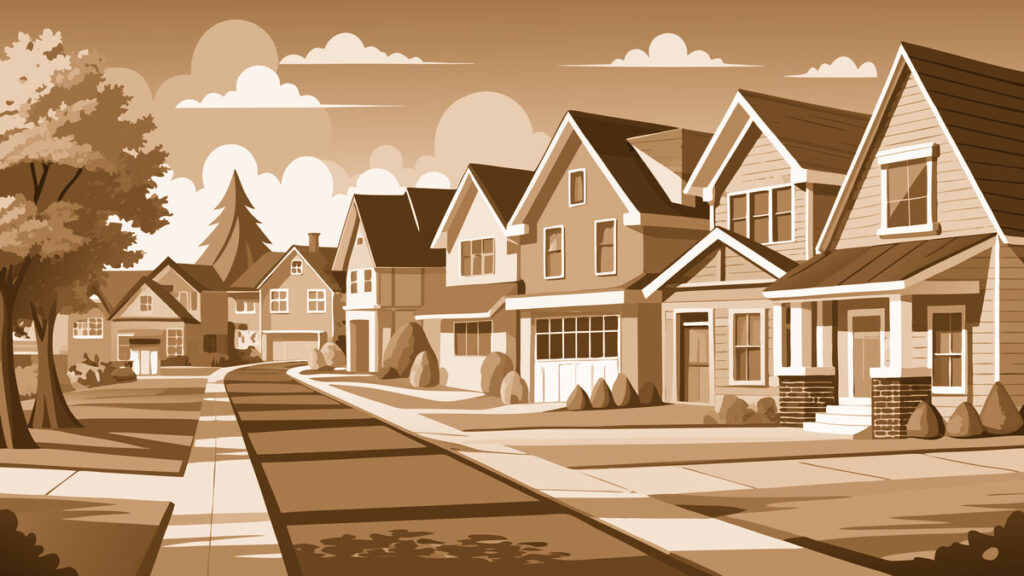
Nestled just north of downtown Jackson, Michigan, lies a neighborhood with more charm than many realize at first glance: Frog Town. Its tree-lined streets, sturdy brick homes, and the cheerful chorus of its namesake bring a vibrant authenticity to Jackson’s quilt of communities. To the unfamiliar, Frog Town may sound whimsical, but its past is rich, its ties are tight, and its legacy is one worth celebrating.
The Origins of Frog Town
The roots of Frog Town stretch back to the mid-19th century, when Jackson started blossoming beyond its original core. Early settlers found this tract north of today’s Michigan Avenue, bordered loosely by Mechanic Street to the west and Blackstone to the east, to be low-lying and marshy—especially near what is now Ganson Street.
In the spring, the abundant wetlands would come alive with frogs. The chorus would echo through the night and the nickname “Frog Town” stuck. Some of the earliest residents, many with Irish and German heritage, often joked that Jackson had its own “little bayou.” What began as a tongue-in-cheek moniker soon became a badge of local pride.
Naming the Neighborhood: When Frogs Sang Jackson’s Song
Ask any old-timer on Grand Avenue or Gillett Street, and you’ll hear how every rainstorm once brought out the melody of thousands of frogs. In the late 1800s, with the city expanding, drainage improvements were made, but the nickname remained. Instead of letting the name define their challenges, residents came to celebrate the unique quirks of their neighborhood.
Schoolchildren at St. John’s Catholic School and Congregationalists from the old North Congregational Church would giggle about “Frog Town” on their way to morning lessons or Sunday services.
Key Historical Milestones
Frog Town’s evolution mirrors the wider changes in Jackson:
- Late 1800s: Grand Avenue saw the construction of solid, practical homes—many of which still stand. Local industry boomed, and working-class families set down roots, raised children, and built community ties that continue today.
- Early 20th Century: St. John the Evangelist Church and School became pillars of the neighborhood. Baseball games at Ella Sharp Park drew residents from Frog Town down Mechanic Street and across the river—one of many signs of how the neighborhood remained connected to the rest of Jackson.
- The 1950s and 1960s: In postwar years, Frog Town’s families enjoyed backyard gardens, multi-generational porches, and the slow but steady integration of new immigrant populations. The Ganson Street corridor developed small shops, bakeries, and barbers—some family run for over half a century.
- Recent Decades: While some older homes fell to progress, many have been lovingly restored. Annual neighborhood potlucks and block parties bring together both long-timers and newcomers. The marshlands are mostly gone, but several residents recall when spring rains still brought out a frog or two.
Notable Landmarks and Community Touchstones
True to its heritage, Frog Town boasts several key landmarks:
- St. John the Evangelist Catholic Church and School: More than a house of worship, St. John’s has been a gathering place for generations. The church’s stunning red brick façade on Cooper Street is a familiar sight, and its bell towers have marked time for decades of neighborhood life.
- Grand Avenue’s Historic Homes: Stroll down Grand Avenue and you’ll encounter Queen Anne and American Foursquare homes, some with ornate woodwork, others with original carriage houses still standing.
- Ganson Street Shops: From old-fashioned bakeries and corner drug stores in the 1920s, to today’s mix of small businesses, this corridor exemplifies Frog Town’s enduring entrepreneurial spirit.
- Public Parks: While Frog Town doesn’t have a park of its own within its traditional boundaries, residents have always roamed easily to Loomis Park and the playgrounds along Biddle Street, where pickup baseball and family picnics have long been fixtures.
Evolution Over the Decades
Despite changes in population and architecture, the neighborhood’s sense of identity has only deepened. Decades ago, neighbors looked out for each other through church, neighborhood associations, and school events; that hasn’t changed. Block parties and garden clubs remain a big part of the culture. The modern makeup of Frog Town is visibly more diverse, but the values of hospitality and neighborliness endure.
Narratives passed from porch to porch remind us how flooding and frogs once shaped the pace of life, and how the challenges of the neighborhood have fostered resilience and warmth.
- Grand Avenue and Gillett Street are still the social spines of Frog Town. On summer evenings, folks chat on their stoops as children ride bikes. In autumn, the trees blaze orange and red, and trick-or-treaters crowd the wide walks.
- The sound of church bells on Cooper, the sight of refurbished homes on Oak Hill and Clinton Streets, and the story of a neighborhood built on lowland but still rising—these are the sights and sounds that define Frog Town.
A Living Heritage
The story of Frog Town isn’t just history; it’s tradition in motion. Whether you’re new to Jackson or a lifelong resident, a stroll through Frog Town means walking through the perseverance and pride of families who made a marshy patch their home and watched it flourish for generations.
So next time you drive up Ganson Street or spot the stately St. John’s steeple, remember: Frog Town’s history is more than just echoes of frogs in the spring—it’s the heartbeat of a neighborhood that’s endured and thrived as a vital thread in Jackson’s fabric.